




Ephesians 5:11 (KJV):
“And have no fellowship with the unfruitful works of darkness
but rather reprove them.”
(But the Question is HOW? WHEN? WHERE? TO WHOM?)**
** WE NOTE: First Church DID “name false prophets, teachers, persons” however it did it to the Christian Community,NOT THE SOCIETY at large. It did not mock, revile, guess, rumor or openly revile,humiliate or dig up dirt.(reported via Chat GPT AI 2023 for the “ARE YOU SUBMITTED ” type of ongoing series) Sister TD

NOTE: I understand that is it very long. But it is simple and easy to read. Also I repeat several interesting similar teaching perspectives..because it is complex and I want to give you, the reader, ever advantage of teaching perspective,while is not one bit harse, it shows the HEART of the Father not “religious Law” which demands it’s sacrifice and accuses based upon “the required commandments, tense rules” Sincerely, The Author Sister T
FOR THERE TO BE A “FUTURE CHURCH” which “resembles’ a diverse, humble, respectful TRUE EPHESIANS 4 Community which Apostle says is a MUST to effect the SOCIETY I would heed this:

Part 7 will come later today.(right here) but also this is on many other of my websites (www.abidingrelationshiptheology.com, www.ministryaiandi.com and taveauleader.com, more). And I might be soon starting a Substack. ..(will let YOU know.)

PART 5 “MINISTRY AI AND I” FIRST CHURCH, SR OFFICE GENUINE SCANDALS
IDENTIFYING THE GOSSIP MINISTRIES
“CLICK BAIT” LEAKED INFORMATION Versus “REPROVING/EXPOSING” Ephesians 5:11
(C)2024 Taveau D’Arcy All copyrights reserved under international copyright laws, in conjunction with AI

It’s the “Opportunist” seeming… “Big Monetary “Methodology”
This is MY submitted authority, all 5 fold office, non biased Opinion
See Amplified Bible Ephesians 5:11
“Do not participate in the worthless and unproductive deeds of darkness, but instead expose them [by exemplifying personal integrity, moral courage, and godly character];”
Ephesians 5:11 in the English Standard Version (ESV) reads:
“Take no part in the unfruitful works of darkness, but instead expose them.”

Dr T is not a charismatic since DFW 2012 due to this Hot Subject “spilling the latest juicey spicy gossip”
Chat GPT AI says:
This verse calls Christians to avoid participating in sinful or harmful behaviors, especially those hidden in darkness or evil. Instead of joining in, believers are urged to expose those wrongdoings, bringing them into the light, where they can be seen and addressed. This exposure is not about revenge or harmful public spectacle, but about bringing truth to light for accountability, justice, and healing, with the goal of preventing further harm and promoting godly living.
Sister Taveau asks ChatGPT AI:
How should we evaluate modern methodology in addressing accusations, such as talking heads spilling private recordings, broadcasting over airwaves, blogs, and podcasts interviewing aggrieved parties who share private family matters with national and global audiences?
This approach often recruits others to voice opinions and “try” the accused—such as a mother accused of evil, domination, or committing authority sins—while making money off scandal reporting.
The Bible emphasizes proper authority and private confrontation as outlined in Galatians 6:1 and Matthew 18:15-16.
Is this public spectacle a personal attack rooted in grudges or unresolved issues, such as the death of a Christian senior office father, or is it about moral correction? How do we address the growing public opinions, accusations, and judgments against the female senior office governing leader by talking heads?
How can we approach these matters biblically, using methods that align with proper authority, morality, tone, and Jesus’ respect for individuals?
Taveau asks:
What might Christ do in a scandal-prone media age? Please include relevant Bible quotes in Aramaic, Hebrew, or Greek to train others on addressing gossip and honoring authority.
ChatGPT AI responds:

Ephesians 5:11 (KJV):
“And have no fellowship with the unfruitful works of darkness
but rather reprove them.”
(But the Question is HOW? WHEN? WHERE? TO WHOM?)**
** WE NOTE: First Church DID “name false prophets, teachers, persons” however it did it to the Christian Community,NOT THE SOCIETY at large. It did not mock, revile, guess, rumor or openly revile,humiliate or dig up dirt.(reported via Chat GPT AI 2023 for the “ARE YOU SUBMITTED ” type of ongoing series) Sister TD
Sister Taveau asks:
The word “reprove” in Ephesians 5:11 is translated from the Greek word ἐλέγχω (elegchō). To understand its meaning more fully, let’s look at the original language context:
Greek:
- ἐλέγχω (elegchō) means “to convict,” “to refute,” “to rebuke,” or “to expose.” It implies bringing light to something that is hidden, thereby confronting error or wrongdoing.
- However, this does not necessarily imply a public exposure for the purpose of revenge, harm, or making money. It refers more to correction with the goal of repentance and restoration.
- The focus of elegchō is on exposing the sin in order to correct it and lead the person to repentance, not to cause public shame or financial gain.
-
- Matthew 18:15-16 offers insight into the biblical approach to addressing wrongdoing: confronting someone privately first, and only escalating publicly if they refuse to listen.
Hebrew & Aramaic Context:
- While Ephesians was originally written in Greek, to understand its concept in a broader biblical context, we can refer to the Hebrew Bible or Aramaic words.
- In the Hebrew Bible, words like “yākach” (יָכַח), which means “to correct” or “rebuke,” appear in verses like Proverbs 9:8 and Isaiah 1:18, implying correction in a constructive, restorative manner rather than exposing for harm.
- Example in Hebrew:
- Proverbs 9:8: “Reprove not a scorner, lest he hate thee: rebuke a wise man, and he will love thee.”
- This suggests that reproof is meant to correct and lead to positive change rather than being vindictive or for personal gain.

Biblical Approach to Reproof and Exposure:
- Reproof, according to biblical understanding, is meant for restoration, not revenge. The goal is always to lead people to repentance and reconciliation, as we see in passages like Galatians 6:1 (“If a man be overtaken in a fault, ye which are spiritual, restore such an one in the spirit of meekness…”).
- Ephesians 5:11 emphasizes the need to correct and expose wrongdoing, but this is not for personal gain or to wound others. Rather, it is about standing against sin and calling others to repentance, as Christ Himself did.
TD asks: ..What about a Christian Today:
MODERN AIRWAVES, LOCAL AND NATIONAL NEWSLETTERS:
Modern Application
Releasing private conversations, secret recordings..exposing to the public, outing a minister on the global airwaves
- Using private conversations or recordings to expose individuals for the sake of public shame or to profit financially would contradict the spirit of the Greek word elegchō. Instead of “exposing” for revenge or personal benefit, biblical reproof is about correcting with the aim of healing, not harming.
- Ephesians 5:11 calls believers to expose sin, but the manner of doing so should always be rooted in love, humility, and a desire to restore, in contrast to public gossip, exploitation, or sensationalism.
Conclusion:
The word “reprove” in the biblical context does not mean “to expose for public shame or financial gain.” It is meant to call attention to sin in order to correct it, leading to restoration and reconciliation, as seen in the overall teachings of the Bible. The focus should always be on the spiritual goal of reproof—restoration, not on personal revenge or exploitation.
Taveau questions:
What about Christ and Judas? more.
Biblical Examination of Devaluing Life and Modern Tabloid Culture
TD inquires:
Would Jesus or the Disciples Retaliate or Gossip About Judas?
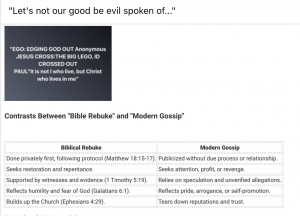
- Jesus’ Response to Judas’ Betrayal
- Jesus knew of Judas’s betrayal yet treated him with love and dignity until the end. At the Last Supper, He offered Judas the bread (a gesture of friendship) even while identifying him as the betrayer (John 13:26-27).
- Jesus did not publicly humiliate Judas or incite the other disciples against him. Instead, He fulfilled His mission, focusing on the Father’s will rather than retaliating.
Lesson: Jesus exemplifies restraint and forgiveness, even when betrayed. He avoided escalating the situation or dehumanizing Judas, teaching us to rise above vengeance.
- The Disciples’ Reaction
- The disciples did not launch a smear campaign against Judas after his betrayal. They mourned the loss of one who had been among them (Acts 1:16-20). They prayed and sought God’s guidance to replace Judas, focusing on advancing Christ’s mission rather than dwelling on past wrongs.
Apostle Paul’s View on Retaliation and Gossip
- Condemnation of Gossip and Slander
- Paul strongly condemned gossip, slander, and divisiveness:
-
- Ephesians 4:29: “Let no corrupt communication proceed out of your mouth, but that which is good to the use of edifying, that it may minister grace unto the hearers.”
- Romans 1:29-30: Paul lists whispering (gossip) and backbiting among sins that lead to unrighteousness.
Implication: Paul would not have condoned a culture that profits from exposing others’ sins in a scandalous or exploitative manner.
- Call to Restoration and Humility
- Paul emphasized confronting sin in a way that seeks restoration, not destruction:
- Galatians 6:1: “Brethren, if a man be overtaken in a fault, ye which are spiritual, restore such an one in the spirit of meekness; considering thyself, lest thou also be tempted.”
- 2 Timothy 2:24-25: “And the servant of the Lord must not strive; but be gentle unto all men, apt to teach, patient, in meekness instructing those that oppose themselves.”
Lesson: Even when addressing sin, Paul insisted on a spirit of gentleness and humility. He would reject any ministry culture that dehumanizes or objectifies individuals for personal or financial gain.
- Paul emphasized confronting sin in a way that seeks restoration, not destruction:
- Focus on the Mission, Not Retaliation
- Paul faced betrayal and false accusations but stayed focused on his mission:
- 2 Corinthians 4:8-9: “We are troubled on every side, yet not distressed; we are perplexed, but not in despair; persecuted, but not forsaken; cast down, but not destroyed.”
- He trusted God to bring justice rather than seeking personal vengeance (Romans 12:19).
Modern Application: A ministry culture focused on exposing others for profit distracts from God’s mission and dishonors His call to reconciliation.
- Paul faced betrayal and false accusations but stayed focused on his mission:
Ephesians 5:11 in Context
- “And have no fellowship with the unfruitful works of darkness, but rather reprove them.”
- This verse calls for exposing sin but in a biblical, redemptive way—not for sensationalism or gossip.
- Greek Meaning:
- “Reprove” (ἐλέγχω, elegcho): To correct, convince, or bring to light with the aim of producing repentance.
- It does not imply public humiliation or exploitation for personal gain.
Lesson: Exposing sin must be done with care, seeking to lead others to repentance and salvation rather than creating a spectacle.

Tabloid Culture vs. Biblical Ethics
- Tabloid Culture:
- Profits from scandal, exploits human failings, and dehumanizes people.
- Encourages gossip and judgment rather than resolution and grace.
- Biblical Ethics:
- Values every human life as created in God’s image (Genesis 1:27).
- Calls for confronting sin privately and lovingly (Matthew 18:15-17).
- Seeks restoration and reconciliation, not public shaming (Galatians 6:1).

Conclusion: What Might Christ and Paul Say Today?
- Christ’s Example: Jesus would reject modern tabloid culture, which objectifies and devalues individuals for personal gain. Instead, He would call people to repentance, restoration, and the dignity of every person.
- Paul’s Teachings: Paul would condemn any ministry that profits from gossip and scandal, emphasizing humility, restoration, and a focus on the gospel.
- Call to Action: Christians are called to reflect Christ’s love and integrity, avoiding participation in or support of exploitative, gossip-driven cultures. Instead, they should promote truth, justice, and grace in every interaction.


Sister Taveau asks:
With all of that Ephesians 5:11 defined:
Q. What if a ministry person or relative, someone’s pastor, father sexually assaulted someone. Even a child?
ChatGPT responded:

Taveau repeats:
ChatGPT said:



TD said:
ChatGPT deeply stated:

ChatGPT said:
ChatGPT said:
Taveau said:
ChatGPT said:

THE SWEET INFANT CHRIST IN LIGHT OF THE MODERN CHRISTIAN MATURE HARMFUL BIG ISSUES
Taveau asks AI to
Train about ‘the Sweet Baby Jesus’ ..when He was faced with horrifying, shocking, cruel, demonic accusation, personal and family ministry individual legal,moral real problems.